
HULL
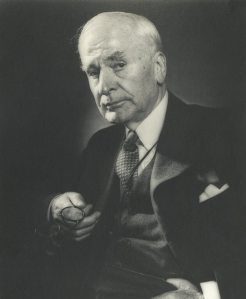
Secretary of State Hull | Public Domain Photo
For anyone to think that war between the United States and Japan was inevitable, the strong doubts expressed by the British and the strident efforts of the Chinese leadership to prevent an agreement are proof that war was not inevitable. In fact, Hull had been about to avoid war by submitting the final draft of a stand-still agreement to the Japanese diplomats. Foreign Minister Togo and the Japanese government, as evidenced by their plaintive and desperate pleas for an agreement through the month of November (1941), surely would have embraced it.
But Hull was not capable of taking that step because he had allowed himself to be controlled by opposition from governments he thought he dared not oppose, whatever the result for the United States. Hull felt stuck to his commitment to them as allies, even though their interests were very different from those of the United States. In this situation of massive, world-shaking importance, the United States had a secretary of state who was unable to maintain a policy that was critically important for the United States but questioned by the British and violently opposed by the Chinese. In failing to maintain that policy, he failed in his duty as secretary of state and failed in his loyalty to the United States. After his ineptitude was later realized, he would be described by Roosevelt as “that old fool, Hull.”