
YAMAMOTO
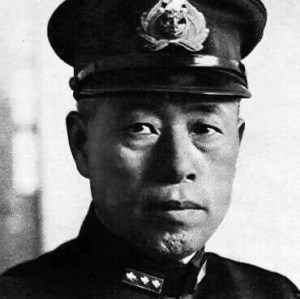
Yamamoto | Public Domain Photo
Conspicuously intelligent, he played bridge and chess better than most good players. Motivated by his skill as a poker player and casino gambler, he was continually calculating odds on an endless variety of situations. Like most powerful leaders he was articulate and persuasive, and once in a position of power pushed his agenda relentlessly. He was considered, both in Japan and the United States, as intelligent, capable, aggressive and dangerous.
A Japanese war plan had been developed during the 1930s to defeat the US Pacific Fleet with submarines, cruisers and battleships if they moved across the Pacific Ocean toward Japan. Yamamoto superseded this strategy with a new concept built around large, fast-moving aircraft carriers that could destroy the Pacific Fleet without waiting for that fleet to move across the Pacific Ocean. As the German army in 1939 and 1940 had employed fast-moving tanks and other mechanized vehicles, supported by Stuka dive-bombers and other aircraft to deadly effect, fast carriers with dive-bombers and torpedo planes were the naval equivalent. What Yamamoto created was a naval blitzkrieg, a lightning war at sea. The fast, highly maneuverable Zero fighter was the world’s best. The dive-bombers had long range operating capabilities, and the torpedo planes carried fast and powerful torpedoes that employed pure oxygen in combustion for greater speed and range.
The Japanese carrier pilots and deck crews were trained to a peak level of expertise that allowed full deck loads of planes to be launched in a matter of minutes. Yamamoto initiated tactical operations for coordinated launches, formations, and attacks by multiple carriers, a skill the U.S. Navy would not match for several years. By the end of 1941, the First Carrier Striking Force would include six large carriers and was the most powerful naval force in the world. It remained to be seen whether Yamamoto, the consummate gambler, would play his odds successfully on the Pacific Ocean chessboard.