
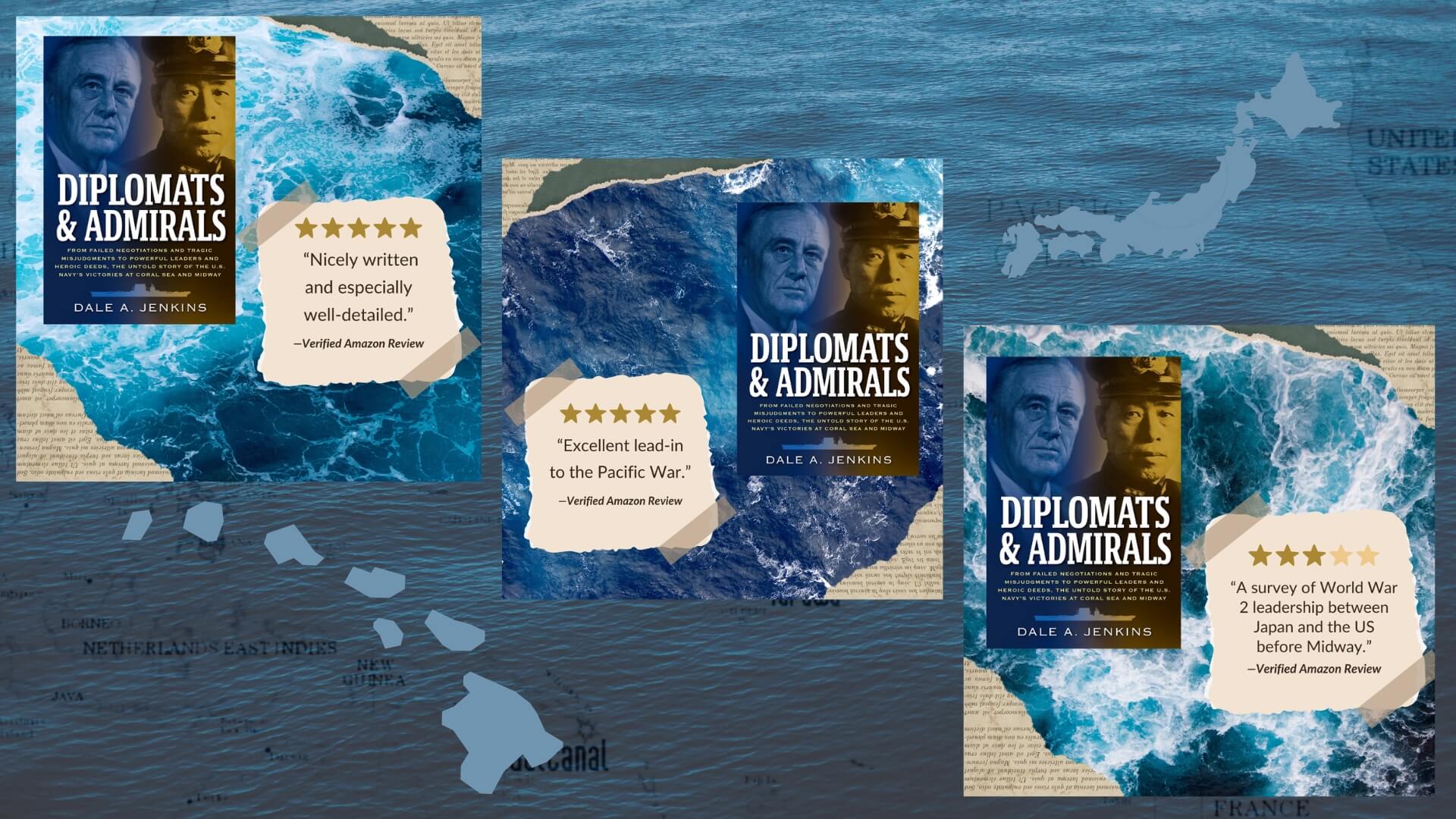
Been studying history for some time. Excellent lead in to the Pacific War. Explaining primary and underlying reasons of the conflict. Sometimes I felt that it portrayed the Japanese as victims of bad U.S. diplomacy. Not saying that is a knock on this book. Just an observation. I do not feel to badly for the Japanese; they invaded China, etc., and committed numerous atrocities. Bottom-line is they had to be stopped somewhere and by someone. Anyone who enjoys or wants to learn more about the diplomatic, strategic decision making processes that led into, and were carried out during the first 6 months of the Pacific War will like this book. It also gives you some initial operational and tactical insight regarding the beginning of the conflict.
Author’s Comment:
Regarding the Japanese as victims, the Japanese people were the victims of poor diplomacy by their government, and both countries suffered from the misjudgements of both governments. I appreciate the writer’s recognition of the “diplomatic, strategic decision-making processes,” as that was a core purpose in writing the book.
Reviewed in the United States on May 29, 2024
Verified Purchase
It covers a number of perspectives and, maybe, as an intro book to the geopolitics of World War 2 Pacific Theater it has value…
Some of the early parts of the book, such as the deep involvement of Secretary Hull memo (outside of the memo itself) and negotiations, were new for me, but much of the rest was either filler or well known.
The author adds a *lot* of commentary which is what made me disappointed in the book. “So and so should have done x”. Paragraph of questions asking “why?” someone did something that made no sense to the author. Give the reader the facts … offer a conclusion toward the end, but the running commentary killed it.
The book is a decent intro into the Pacific theater of World War 2. If you know little then this book does a very good job of getting a reader started.
I was looking for a book on the hows and whys that the politicians reached their conclusions with an exploration of the options and constraint they had. The books covers a broad swatch of early World War 2 Pacific Theater, but falls short on helping the reader understand what it was like for the people who lived it. Of understand the decision making in the moment.
Author’s Comment:
The writer’s observations about Secretary Hull’s deep involvement being new was a major revelation I attempted to make, based on recently declassified documents. After the disasters leading to Pearl Harbor, Secretary Hull in 1945 was awarded a Nobel Peace Prize and was a revered person for the rest of his life—a life that extended to 1955.
Regarding commentary by the author, I suggest that a difference between a journalist and a historian is that a historian should provide perspective, insights and identify motivations. I can only express regret that the writer did not find more about “what it was Iike,” for the people who lived it. It’s hard to supply everything.

A customer
— A well-written book
Reviewed in the United States on February 28, 2023
Verified Purchase
This book was nicely written and especially well detailed. It certainly displayed the out dated Secretary of State, Hull and yet, Roosevelt believed he needed a number of Republicans to solidify his presidency. I found it interesting and informative to study the more in-depth education and practices of the Japanese Naval Admirals. They were directly led by the army – who also had to appoint a member to the Japanese Cabinet and thus could remove an individual which would bring down the government. Their position that Japanese expansionism could only work as long as the United States was not brought into any conflict due to the fact some of the Admirals, Yamamoto included, did not accept Japan could sustain a long war with the United States, and this seemingly was not shared by the army of Japan. Again, a book worth reading and there is much to learn and a good list of sources from which to pursue further interests.
Author’s Comment:
Regarding “Japanese expansionism could work only as long as the United States was not brought in,” there was a point at which the United States inevitably was going to get in. That point was reached when the Japanese invaded southern Indo-China, and had the two protagonists then been able to back off, the war could have been avoided.
 Diplomats & Admirals • Aubrey Publishing Co. LLC. • December 1, 2022 🛒🔗 Purchase Links: Amazon | Barnes & Noble | Kindle



0 Comments