
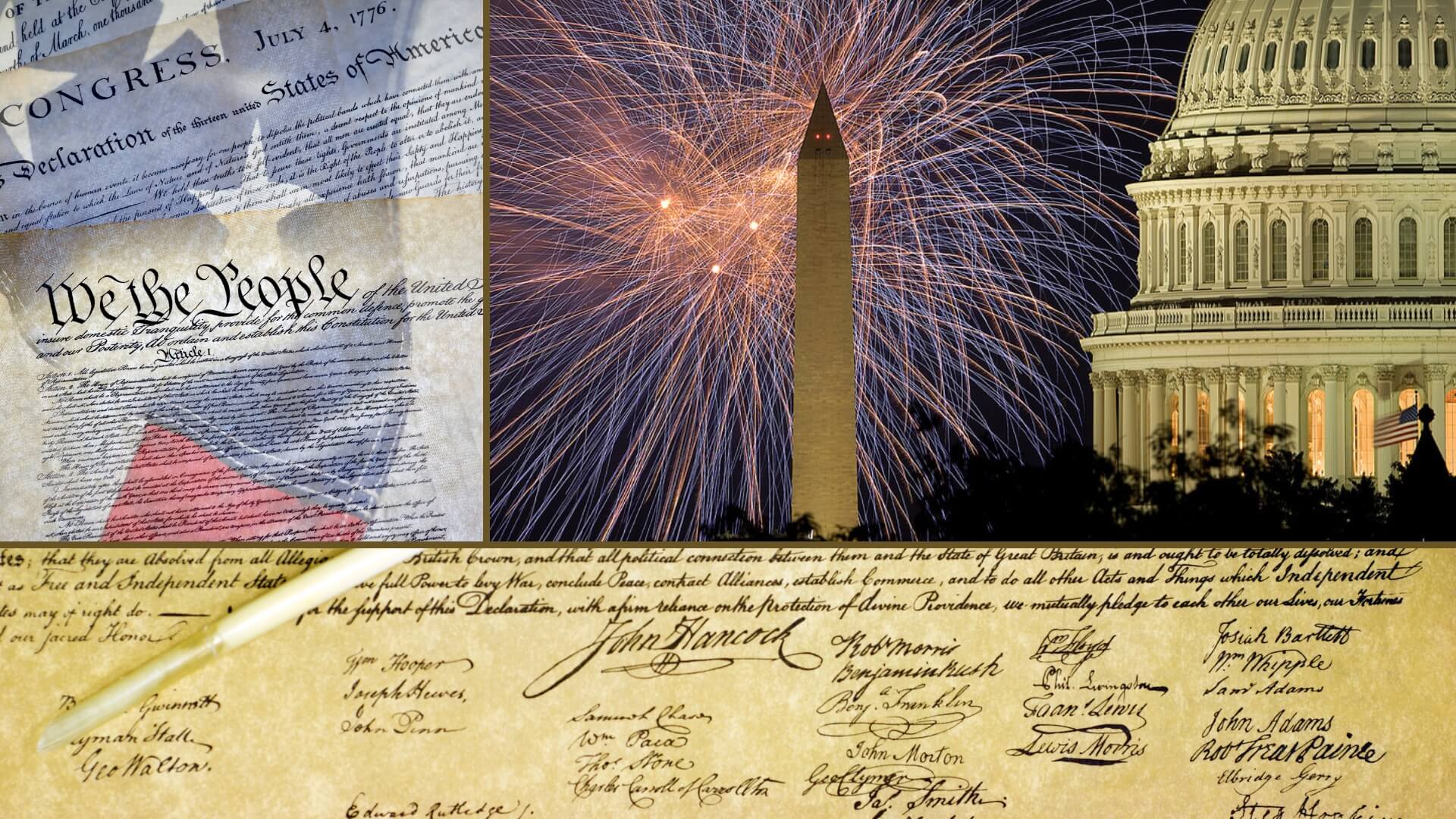
Reflections on Independence, Youthful Fire, and the Spark That Endures
By Dale A. Jenkins
Each year, the 4th of July invites us to remember our nation’s beginnings. We celebrate with fireworks, flags, and fanfare—but beneath the spectacle lies something deeper: a moment in history unlike any other.
The year 1776 was more than just a turning point; it was the ignition of a new world. A declaration was drafted, a bold line was drawn, and a group of ordinary people made an extraordinary decision. In many ways, it was a time of uncertainty—fragile, chaotic, and dangerously ambitious. But it was also a moment of magic.
And they knew it.
In this short series, we’ve opened a little historical time capsule to revisit that extraordinary era—one spark at a time.
Big Signature Energy
When John Hancock signed the Declaration of Independence, he didn’t do it quietly. As President of the Second Continental Congress, he was the first to add his name—and he made sure it was unmistakable.
There’s a legend that Hancock signed his name so large that King George III could read it without his spectacles. While there’s no historical evidence to confirm that, the symbolism still resonates. His signature wasn’t just bold—it was defiant.
Today, “put your John Hancock here” means something more than signing a document. It means signing with purpose. With pride. With conviction.
And Hancock’s role in shaping the nation didn’t end in 1776. Eleven years later, in 1787, he was serving as Governor of Massachusetts and played a key role in advocating for the ratification of the United States Constitution. He continued to lend his name—and his influence—to the foundation of the republic.
The Youth of the Revolution
We often picture the Founding Fathers as wise, weathered elders—solemn men in powdered wigs and waistcoats, seasoned by decades of political experience. But the truth may surprise you.
Thomas Jefferson was 33 when he penned the Declaration.
Edward Rutledge, the youngest actual signer, was only 26.
Alexander Hamilton—though not a signer—was a key figure at just 21.
The average age of the signers? About 44.
There was one notable exception: Benjamin Franklin, age 70—the witty, wise elder of the Revolution. While others drafted rebellion, he was inventing bifocals, securing French support, and grounding the chaos in wisdom.
In the end, American independence was powered by youthful fire—and guided by one remarkable elder statesman.
Lighting the Fire
The first celebration of Independence Day came just one year after the Declaration was signed—in 1777. Philadelphia marked the occasion with bonfires, cannon blasts, ringing bells, and fireworks. The tradition of lighting the sky began not long after the ink had dried.
Even before that, John Adams envisioned it all. In a letter to his wife, Abigail, he wrote:
“It ought to be commemorated… with Pomp and Parade… with Shews, Games, Sports, Guns, Bells, Bonfires, and Illuminations from one End of this Continent to the other.”
He may have gotten the date wrong—he thought we’d celebrate on July 2—but the sentiment was right. The Founders knew they were living through something monumental.
A Spark That Endures
That moment in 1776—followed by the flicker of celebration in 1777—remains singular in world history. A fragile collection of colonies declared their independence from the most powerful empire on earth, not because they were certain of success, but because they believed in the idea of liberty more than they feared the cost of pursuing it.
Just like the Founders themselves, America has had its false starts.
We’ve taken wrong turns, strayed from the path, and sometimes, forgotten who we are.
But we always come back.
We remember the fuse they lit.
We remember our American spark.
Today, we light the skies… because yesterday, they lit the fire.
Happy Independence Day.
—Dale A. Jenkins 🎆🦅
 Diplomats & Admirals • Aubrey Publishing Co. LLC. • December 1, 2022 🛒🔗 Purchase Links: Amazon | Barnes & Noble | Kindle



Very nice Dale. John
>
Very well expressed, Dale,LarryLawrence W. NewmanBaker McKenzie452 Fifth AvenueNew York, NY 10018Tel: + 1 646 462 1708;1 646 510 4783lawrencenewman3@gmail.com; lwn@bakernet.com
My mother forwarded this uplifting post to me. I enjoyed reading it as it reminded me of the values that unite us together. Thank you! Cara