
SORGE
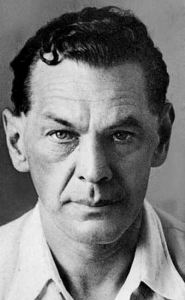
Richard Sorge | Public Domain Photo
The most successful spy in the war on any side was Richard Sorge, a German and Nazi Party member operating as a journalist in Tokyo, but in fact working for Russia. Sorge was a wounded German veteran of the Great War who had come to believe in communism, and that belief determined his ultimate loyalty. He built a small network of spies in Tokyo, and through various sources uncovered the date of Operation Barbarossa, Hitler’s invasion of Russia, which he reported to Stalin. Opinions differ on whether Stalin believed Sorge’s information about Barbarossa, but when it turned out to be true it added credibility to other important information from Sorge. His standing with Stalin was enhanced, and Sorge established himself as a reliable source for crucial intelligence transmissions.
Sorge was the potential target of three counterspy investigations. The German Gestapo was suspicious of his activities, and Colonel Joseph Meisinger, for good reason known as the Butcher of Warsaw, was sent to Tokyo to investigate. The Russian NKVD was checking to determine the true loyalties of Sorge, and any significant suspicion would have resulted in his elimination. Finally, the Japanese secret police were aware of illegal coded radio transmissions, and its agents were suspicious of Sorge and other members of his network. Sorge was able to elude all these operations by complicated maneuverings, alcoholic seductions and lies for several years, during which he played a crucial role in the outcome of the war.
The Imperial Japanese Army had rejected Foreign Minister Matsuoka’s demand in June (1941) that they attack Russia in the Siberian east when Hitler invaded Russia on its western front, but it did not eliminate the possibility of a Siberian attack if circumstances changed. The pro-war army elements in Japan had the delicious thought that precipitating a two-front war in Russia with an invasion of Siberia likely would finish Russia, their long-standing enemy. The army was watching the progress of the German offensive approaching Moscow, and, despite the impending shortage of oil, a defeat of Russia in the west would be the signal for an attack on Siberia.
A Siberian attack would have to begin by the end of August for troops to not be caught in the Siberian winter. In mid-August the Japanese Kwantung Army ordered hundreds of thousands of troops loaded onto trains for Manchuria. Plans were made for shipping one hundred thousand tons of military armaments and equipment. Movements of this magnitude could not be made secretly, and Stalin would have been aware of this development. August, 1941 was the most perilous time for Russia in the entire war.
Sorge had his spies following the Japanese move to Manchuria, collecting every available scrap of information. Finally, on September 14, a member of the Sorge ring returned from Manchuria with the information that the Japanese buildup in Manchuria was being reversed. A message went to Stalin with that crucial information. This was the most important intelligence information that was obtained by any spy in the entire war.
Exactly what produced this sudden turnaround by the Japanese army is not possible to identify exactly, but there had been earlier discussions in army circles that Japan would not invade Siberia until they were sure of a German win in the west. News of the slowing German advance may have reached the Japanese generals, causing them to pull back as winter approached and not have their troops exposed to possible Russian eastward troop movements if the German invasion were stopped. The entire Japanese move to Manchuria may have been just a feint to hold Russian troops in Siberia while the German army captured Moscow, but if that was their strategy they did not hold their Manchurian position long enough. Stalin, with the information from Sorge and confident that no attack could be made after mid-September, began transferring his Siberian forces to the west. By the first week of December, 18 divisions of troops, 1,500 tanks, and 1,700 planes had been moved west to defend Moscow.