
SPRUANCE
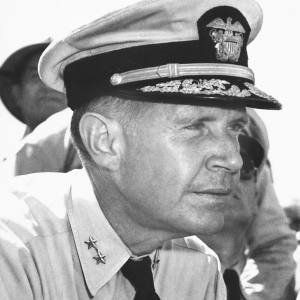
Admiral Spruance | Public Domain Photo
West of the Pacific Fleet carriers, Admiral Yamamoto with his battleships followed the two battleships of the Striking Force, and they steamed eastward at full speed into the night. If the Americans pursued westward he possibly could get his battleships within range of the American carriers, and the massive guns of Yamato and the other battleships could reverse the outcome of the battle. Far ahead the destroyers went to flank speed to search for the US carrier force. Lookouts, with the best night-vision binoculars in the world, swept the night horizon where the very dark sky meets the black ocean. The faintest shape, the tiniest pinprick of light, would show there was something out there, like the superstructure of a ship over the horizon. There was nothing. By midnight Yamamoto realized, with his air cover destroyed, he would be vulnerable to an air attack from the American carriers at first light. The plan for a night surface battle had failed. Leaving four sunk or sinking carriers behind, a devastated Yamamoto reversed course to the west, and his entire fleet went into retreat.
The remnants of the huge Japanese fleet would be pursued over several days with comparatively minor action. But when Admiral Spruance turned the US carrier force to the east late in the day on June 4, the Battle of Midway, for all intents and purposes, was over.