
McCLUSKY
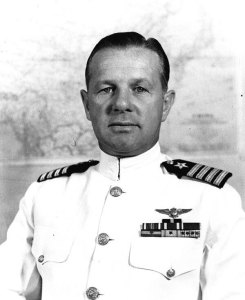
Lieutenant Commander McClusky | Public Domain Photo
By 0930 he should have intercepted the Japanese carrier force, but he saw nothing but open ocean. Now all his experience and judgment were needed in this crucial moment. He decided to turn 90 degrees to the northwest and search on the reverse of the Japanese course. If the Japanese had maintained their earlier course but had been delayed for any reason, such as the need to take evasive maneuvers, flying the reverse of that course would find them. He executed the turn, and the two squadrons followed. Every minute on that course consumed more fuel and took the planes farther from Enterprise.
McClusky led the planes on the reverse of the Japanese course for about fifteen minutes until he had covered enough ocean to be confident the carriers were not on that track. The Dauntlesses were a long way from their carrier and the fuel situation was becoming serious. He would have been fully justified in turning back to Enterprise, but he knew the Japanese carriers were out there, and he had to find them. He turned his group north to execute the first leg of a search pattern.
Then, just before 1000, McClusky spotted a lone destroyer, which could only be Japanese, heading northeast at flank speed. He turned his planes to parallel the course of the destroyer. After several minutes of flying McClusky saw white slivers on the horizon, indicating the wakes of ships. Following farther, and emerging from over a cloud layer, the Japanese carrier force was spread out below him. The yellow decks, each painted with a large red disc, identified the carriers. At 1002 the electrifying message went out: “This is McClusky. Have sighted the enemy.”
McClusky’s decision to persevere on his mission and decide on the search courses under the pressure of battle conditions and low fuel are some of the greatest moments of command leadership in the entire war.