

Everyone acknowledges China’s growth and active ambitions. More recently, the news has focused on the weakening of American armed forces in the region, particularly naval forces. The US Seventh Fleet is, at best, static. There used to be three aircraft carriers in the western Pacific, but now there is one. China’s navy has grown and now has more, albeit smaller, ships than the Seventh Fleet. A Seventh Fleet aircraft carrier is powerful but can only be in one place at a time.
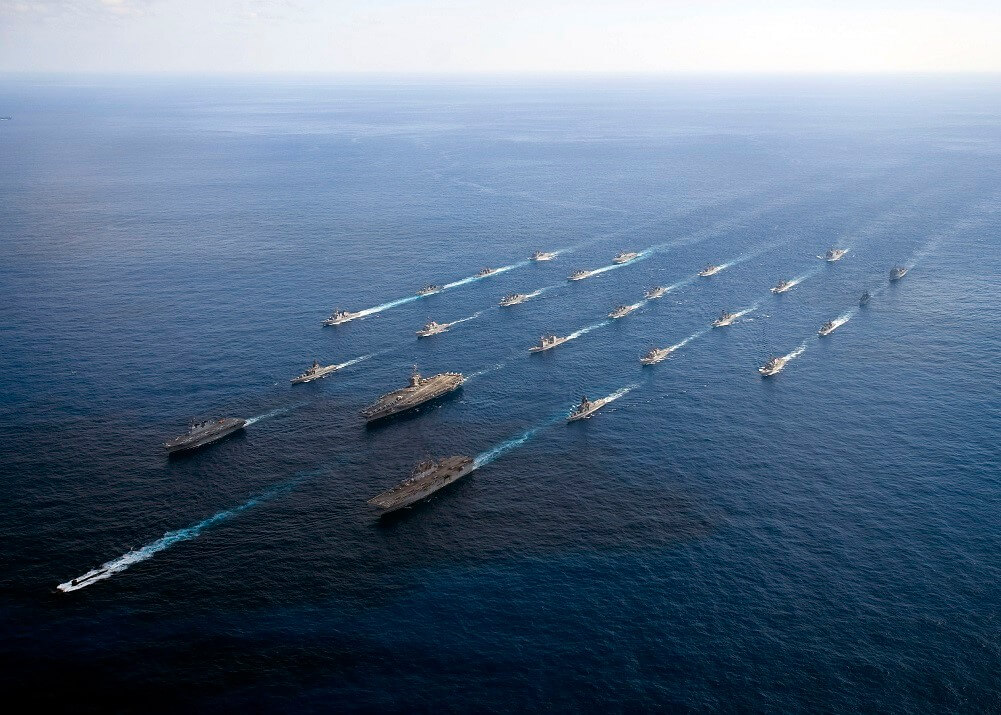
The US 7th Fleet | Photo Credit: US Navy
Against this deteriorating statistic is the growth of the economies and, more recently, the armed forces of other Western Pacific countries. Most notable is Japan, who, in the aftermath of the devastation of World War II, pledged total pacifism, now sees the threat of China and has decided that pacifism is no longer possible. Shades of the Imperial Japanese Navy may rise again. Similarly, Australia has stepped up to the need for submarines to guard its sea lanes, and they have scheduled the latest advanced design from the United States. The Philippines, resentful of Chinese encroachment along their South China Sea coast, is stiffening their resistance to China. Farther west, India, the largest country in the world by population and the fastest-growing economy among major nations, has had continuous border clashes with China and is in no mood to accommodate. Vietnam has had traditional differences with China for centuries. Indonesia is gathering strength, although less defined than the others.
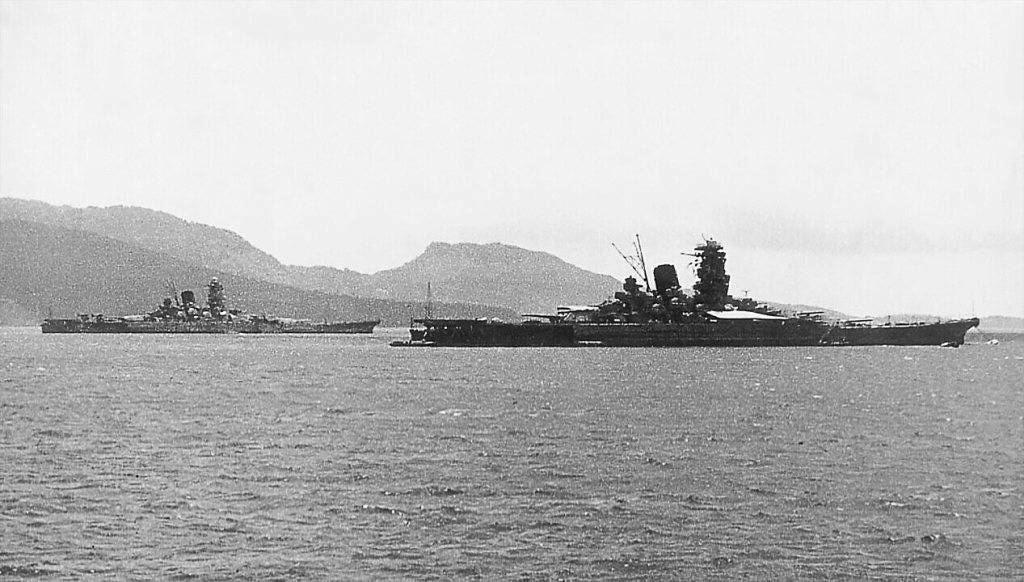
The Yamato-class Battleships Yamato and Musashi moored in Truk Lagoon in 1943 (Public Domain)
This has created a growing web of loose alliances facing China, of which the United States is the largest member. The United States exports technology, trains personnel, and generally supports this arc of countries surrounding China on its east and southern sea approaches. India forms a stiff boundary on China’s west. China, heavily dependent on trade for its economy, has to contend with securing sea routes for its trade—both imports and exports.
Unanswered are the questions of who will do what in the face of an overt move of armed forces or even a blockade, such as Taiwan. The biggest question for all members of the arc around China is, what will the United States do when something happens? With that as the big uncertainty, it’s difficult for any member of the arc to have a clear strategy.
We’ll see what happens…
What are your thoughts on this topic? I would love to know in the comments on this post and/or my Facebook page!
~DJ


Just stopping by to leave you some comment love! ~Witchy 🖤