
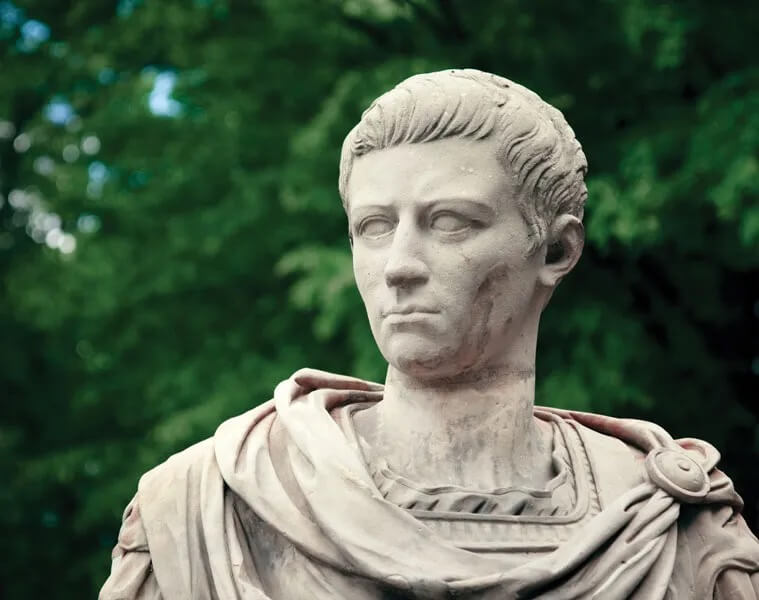
The Roman Empire developed as a civilization over seven centuries from the city of Rome to an empire encompassing the territories on the entire shoreline of the Mediterranean Sea, north to the British Isles and eastward to the valley of the Tigris and Euphrates. They developed a republican government headed by a senate that appointed institutions of government and co-consuls with a term of one year. The civilization expanded and was maintained by a highly trained and disciplined army. The army also built roads, aqueducts and other infrastructure. The result was a prosperity that benefited citizens broadly.
“The empire of Rome comprehended the fairest part of the earth, and the most civilized portion of mankind. The frontiers of that extensive monarchy were guarded by ancient renown and disciplined valor. The gentle but powerful influence of laws and manners had gradually cemented the union of the provinces. Their peaceful inhabitants enjoyed and abused the advantages of wealth and luxury. The image of a free constitution was preserved with decent reverence. The Roman senate appeared to possess the sovereign authority, and devolved on the emperors all the executive powers of government.” —Edward Gibbon, The History of the Decline and Fall of the Roman Empire
With the arrival of Julius Caesar, the republic was replaced by an emperor with dictatorial powers. Life continued agreeably under his eventual successor emperor, Caesar Augustus, but at the end of his reign things changed abruptly. Over nearly a century, several emperors ruled by impulse and vindictiveness. Decisions were made by whim and prejudice. A thumbs-up one day could be a thumbs-down the next. They had total control over the powerful Roman army.
The most destructive and cruel included Nero and Caligula. Executions of perceived enemies and arbitrary extortions of citizens marked their reigns. Nowhere was arrogance better shown than in the life-or-death impulses deciding the fates of participants in the Roman circus. Caligula’s pretensions of divinity and perverse morality ended by a revolt of the Praetorian Guard, the personal security force of the emperor. An eventual return of emperors with a greater sense of humanity included Hadrian and Marcus Aurelius. After their tenures, the empire continued for another three centuries.
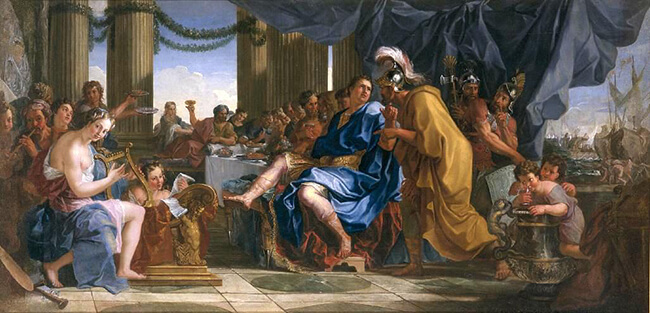
“Nero ordering the Murder of his Mother” | Painting by Noël Coypel
A question emerges: How could the Roman Empire survive a century of disastrous rulers like Caligula and Nero?
There are several factors that contribute to an answer, but none are more important than a simple fact: Rome had no serious challengers. From the earliest days, the still-small army fought only against barbarian tribes. At the height of the empire, it still required actions only against barbarian tribes. There was never a substantial rival power. Even the great Hannibal was hardly more than an irritant. Chinese civilization and those of other powerful regional powers were unknown.
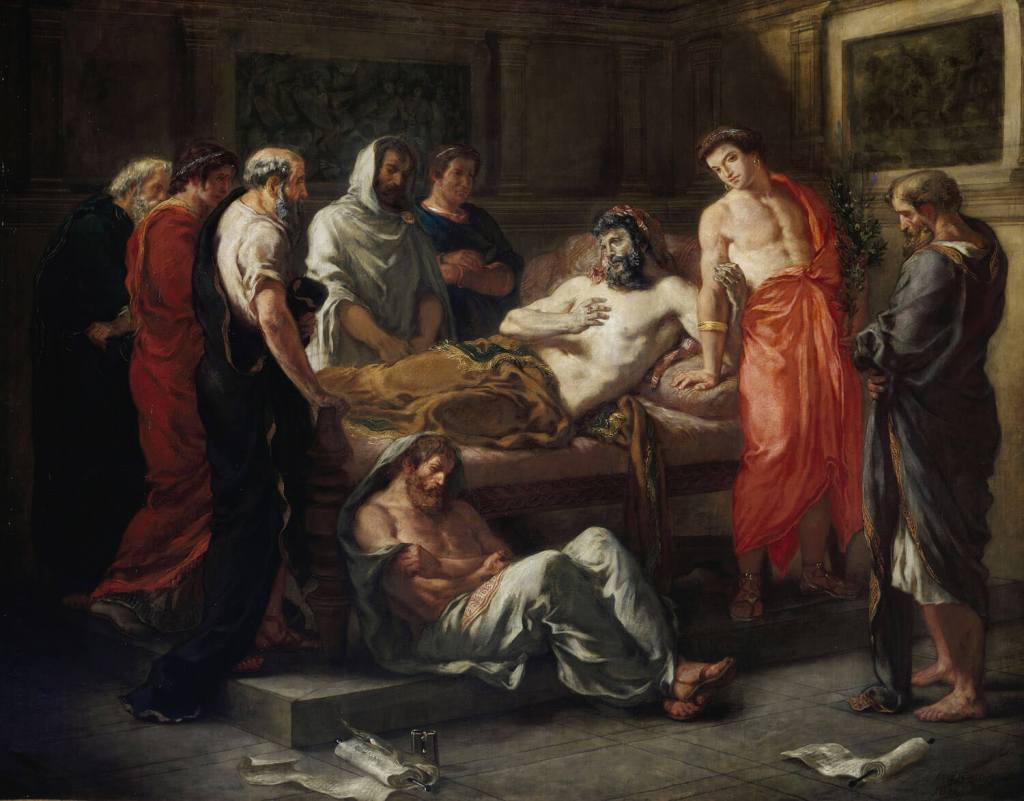
“Last Words of the Emperor Marcus Aurelius” | Painting by Eugène Delacroix
The United States grew from its beginnings, now 250 years ago, with the challenge of settling a continent. After independence, we faced few challenges from external forces. Following decades of hegemony after World War II, the United States now is part of the international mix of world powers. We have powerful rivals for influence and control from around the world that could challenge our prosperity and even, in a worse case, threaten our survival. The future of the United States may be determined by whether we choose leaders like Caligula and Nero, or Augustus, Hadrian and Marcus Aurelius.
~Dale A. Jenkins
 Diplomats & Admirals • Aubrey Publishing Co. LLC. • December 1, 2022 🛒🔗 Purchase Links: Amazon | Barnes & Noble | Kindle


I’ve often felt like 45/47 is our Caligula… especially with the stuff unearthed in the Ep-Files… 😱
Thanks for sharing this, Dale.
I agree with all your points.
Too small a minority understand the vigilance with which a republic such as ours must be protected from the forces who would transform it into a dictatorship.
Our primary and secondary education systems have all but purged citizenship and history from their curricula. The consequence (whether intended or not) is a general population whose understanding of the duties and responsibilities of citizenship is all but nil. Combine that ignorance with the belief that all relationships are transactional and we have perfect conditions for the demise of the USA as we have known it.
I wonder what percentage of your readers recognize Gibbonâs name, let alone have read his six volume opus.
I trust all is going well with you.
Cheers,
Fred
Frederick J. Passman, CAPT, USN, Ret.
Commander General (CG)
Naval Order of the United States (NOUS)
commandergeneral@navalorder.orgcommandergeneral@navalorder.org
passcapt@live.compasscapt@live.com
Naval Orderhttps://www.navalorder.org/
[cid:image001.jpg@01DCD411.3194A530]