
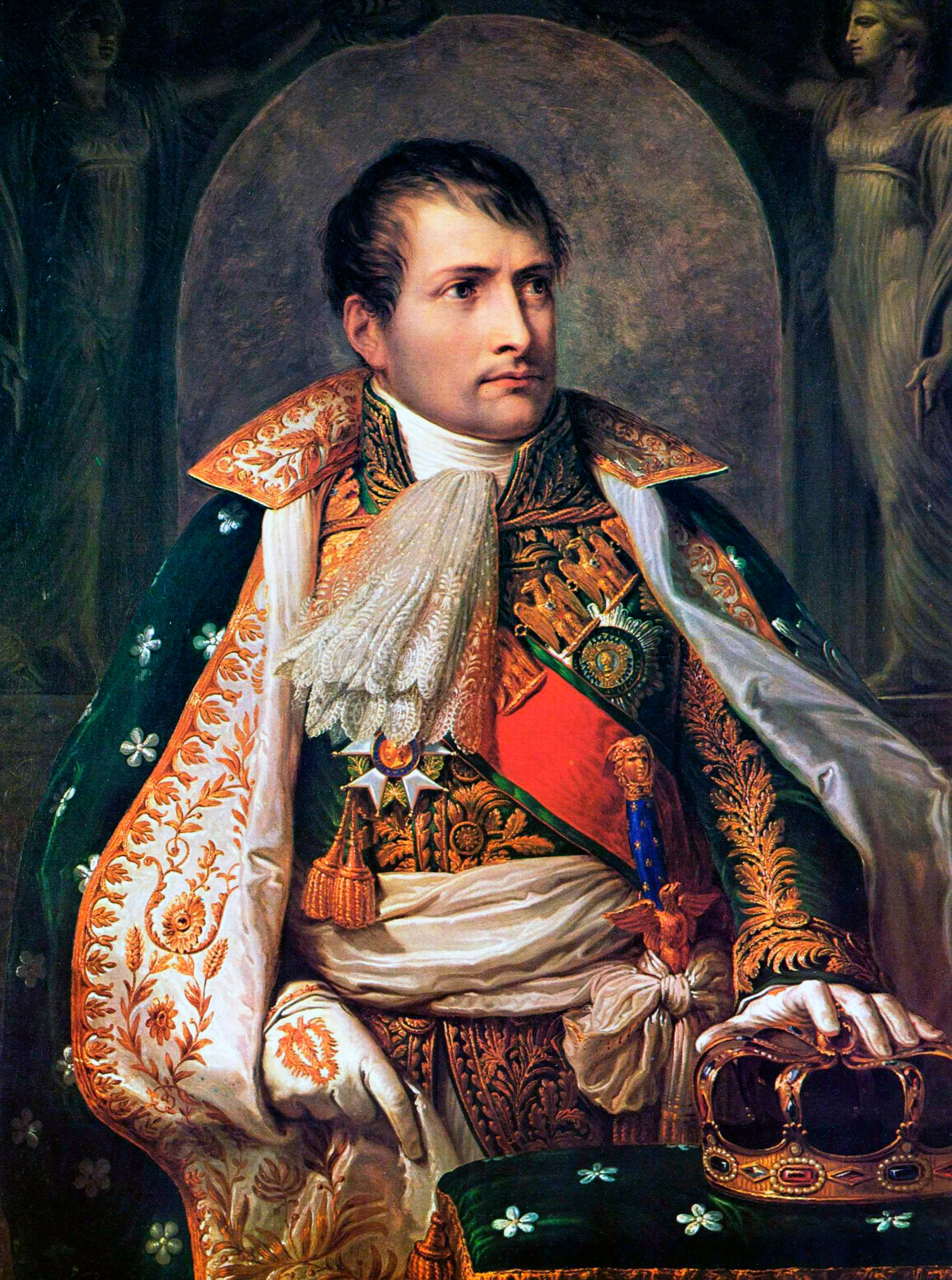
In 1804, in a pompous ceremony in Notre Dame cathedral, Napoleon placed the royal crown of France on his own head and proclaimed himself Emperor of France. The ceremony took place with Pope Pius VII in attendance to conduct the coronation, but to show that he was the supreme secular person Napoleon refused to allow the pope to bestow the crown. That would have implied a separate power that he wished to assume entirely for himself.
In the summer of 1812, after a series of military victories throughout Europe over several years, there was one more country to conquer: Russia. He moved with a huge army across the steppes of eastern Europe and into Russia itself. The army was confident, and their loyalty to Napoleon was unswerving.
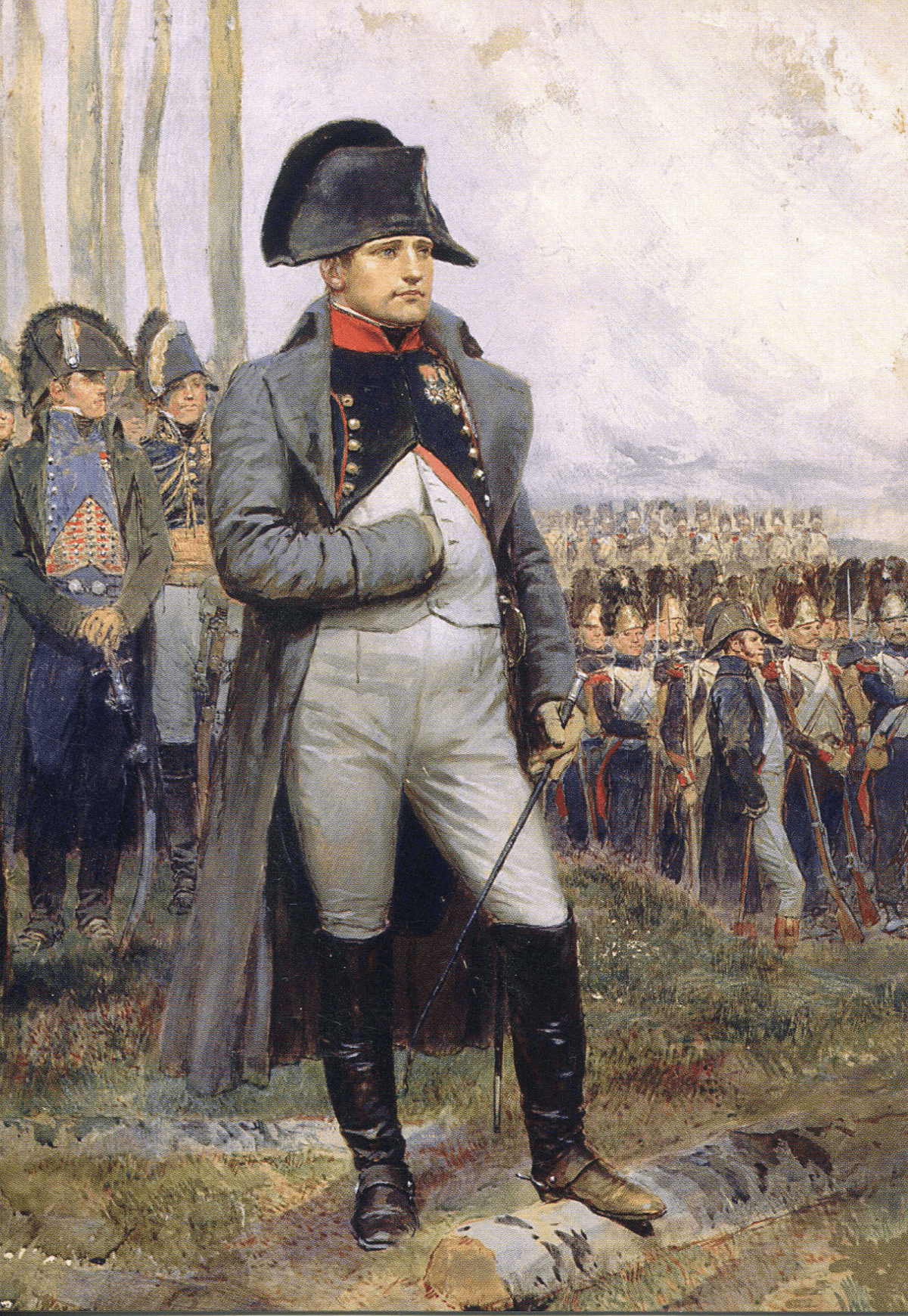
Napoleon in 1806 (Public Domain Image)
Alexander, the Russian emperor, attempted to reach an agreement with Napoleon to head off a deeper invasion of Russia and prevent further loss of life. He sent a Russian general, Adjutant General Balashev, under a flag of truce, to deliver a message directly to Napoleon. War and Peace, by Leo Tolstoy, describes the events when General Balashev was received in a former Russian estate, now the field headquarters where Napoleon was ensconced.
After passing through several levels of protocol over several days General Balashev was ushered into a relatively modest reception room to await Napoleon’s arrival. A Napoleon gentleman-in-waiting informed him that Napoleon would see him before his morning ride. The general was hardly seated when there was a sudden flurry of activity amongst the staff. Napoleon entered briskly, with a gracious and majestic expression of imperial welcome. He wore a blue uniform coat over a white waistcoat, a short, corpulent figure with broad, thick shoulders and chest and stomach involuntarily protruding. He had that imposing and stately appearance one sees in men of forty who live in comfort. He looked at Balashev’s uniform and sword.
He began speaking like a man who values every moment of his time and does not condescend to prepare what he has to say but is sure he will always say the right thing and say it well. He glanced with his large eyes into Balashev’s face and immediately looked past him. It was plain that Balashev’s personality did not interest him at all. Evidently only what took place within his own mind interested him. Nothing outside himself had any significance for him, because everything in the world, it seemed to him, depended entirely on his will.
“I have received the letter you brought from the Emperor Alexander and am very glad to see you. I do not, and did not, desire war, but it has been forced on me. Even NOW (he emphasized the word) I am ready to receive any explanations you can give me.”
Balashev stated that Emperor Alexander wished for peace but would not enter negotiations except on condition that the French army retires beyond the (river) Niemen.
Without moving from where he stood Napoleon began speaking in a louder tone and more hurriedly than before. Then he began to pace the room. He was no longer trying to show the advantages of peace and discuss its possibility, but only to prove his own rectitude and power, and discuss Alexander’s errors and duplicity. The whole purport of his remarks now was evidently to exalt himself and insult Alexander. He wanted to do all the talking, and continued to talk with a sort of eloquence and unrestrained irritability to which spoiled people are so prone.
“What is the aim of your alliance with England? What has she given you? What could Alexander wish or look for that he would not have obtained through my friendship? But no, he has preferred to surround himself with my enemies. And what role is your monarch playing in that monstrous crowd? They compromise him and throw on him the responsibility for all that happens.”
Napoleon was hardly able to keep pace in words with the rush of thoughts that incessantly sprang up, proving how right and strong he was (in his perception the two were one and the same).
“I know everything! I know the number of your battalions as exactly as I know my own. Know that if you stir up Prussia against me I will wipe it off the map. Yes, I will throw you back beyond the Dvina and beyond the Dnieper. Yes, that is what will happen to you. That is what you have gained by alienating me.” He walked silently several times up and down the room, his fat shoulders twitching.
Balishev, feeling it incumbent on him to reply, said that from the Russian side things did not appear so gloomy. Napoleon was silent, still looking derisively at him and evidently not listening to him. Balashev said that in Russia the best results were expected from the war. Napoleon nodded condescendingly, as if to say,
”I know it’s your duty to say that, but you don’t believe it yourself.”
Napoleon stamped his foot twice on the floor. The door opened immediately; a gentleman-in-waiting, bending respectfully, handed the Emperor his hat and gloves. Another brought him a pocket handkerchief. Without giving them a glance, he turned to Balashev:
“Tell your Emperor Alexander from me that I am as devoted to him as before. I know him thoroughly and esteem his lofty qualities. I will detain you no longer, General: you shall receive my letter to the Emperor.”
He went quickly to the door and was gone. His ride took him through Vilna, where crowds of people rapturously greeted him and followed him. Flags and his monogram were displayed from the windows, and Polish ladies waved their handkerchiefs to him.
Balashev felt convinced that Napoleon would not wish to see him again, but to his surprise he received an invitation to dine with him that evening. Three of Napoleon’s marshals were present at the dinner. Napoleon met Balashev cheerfully and amiably. He showed no sign of his outburst that morning and his intention was to mollify Balashev. It was evident that he had long been convinced that it was impossible for him to make a mistake, and that in his perception whatever he did was right, not because it harmonized with any idea of right or wrong, but because he did it. He treated Balashev as one of his own courtiers, one of those who sympathized with his plans and ought to rejoice at his success. It was as if it was ridiculous, in his presence, to be the adorer and courtier of anyone but himself,
As the occasion was coming to a close Balashev nodded his head indicating that he would like to make his bow and leave. Napoleon gave no notice of this gesture: he treated Balashev not as an envoy from his enemy, but as a man now fully devoted to him and must rejoice at his former master’s humiliation. Then, without looking at anyone, Napoleon said, “Are the horses ready for the general?” Then added, “Let him have mine, he has a long way to go.”
The letter taken by Balashev was the last Napoleon sent to Alexander. Every detail of the interview was communicated to the Russian monarch, and the war began.
 Diplomats & Admirals • Aubrey Publishing Co. LLC. • December 1, 2022 🛒🔗 Purchase Links: Amazon | Barnes & Noble | Kindle


Dale, Great! Please keep the email coming. Al
Fascinating story and well written.His behavior reminds me of th