
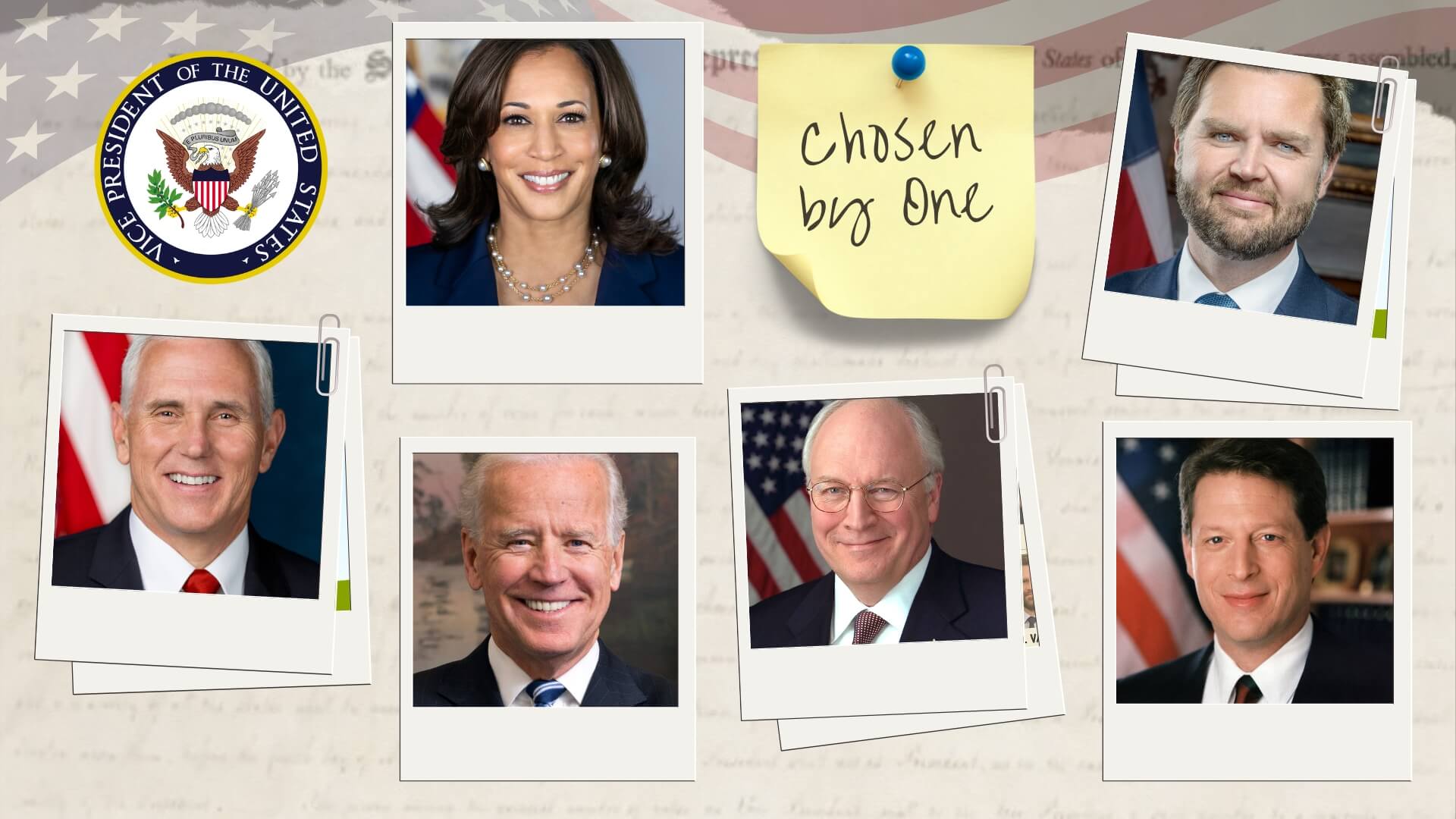
Of the forty-six Presidents of the United States with completed terms of office, nine, or 19.6% of the total, were vice presidents who succeeded to the presidency on the death or resignation of the previous president. Despite this significant statistic, the selection of the vice-presidential candidate has increasingly become an individual choice by the presidential candidate, either during the primary season or at the party’s national convention. Often narrow parochial considerations or political calculations determined the choice. The result is that nearly 20% of the presidents of the United States have been chosen by a single person on nine separate occasions. It would be more consistent with our system of democracy if the vice president were chosen by the voting citizenry.
Under the terms of the original 1787 United States constitution the election of the president and vice president was determined by the voting of electors. Each state according to its laws selected electors, and each elector had two votes. The federal constitution provided that the candidate with the greatest number of votes was elected the president, provided it was a majority of the total number of electors, and the person receiving the next highest number was elected the vice president. By this method the voters participated in the selection of vice president through their selection of electors.
The system worked well in the first two elections when Federalist George Washington received a unanimous electoral vote each time, and John Adams, also a Federalist, received the next highest number. However, in the 1796 election John Adams was elected president and Thomas Jefferson, from a different political party, was elected vice president. In 1800 Jefferson and Aaron Burr were tied in the electoral votes for president, and Jefferson won only after long-drawn and complicated balloting in the House of Representatives. In the aftermath of these events the constitution was amended in 1804 by the Twelfth Amendment which contained the following language:
The Electors shall meet in their respective states, and vote by ballot for President and Vice-President… they shall name in their ballots the person voted for as President, and in distinct ballots the person voted for as Vice-President, and they shall make distinct lists of all persons voted for as President, and all persons voted for as Vice-President.
Currently, when voting in national elections, each citizen voter receives a ballot that has the names of the party candidates for president and vice-president entered jointly in the same space. A single vote by each voter is a vote for both candidates, and this determines that the number of electoral votes from each state for president and vice president will be the same and the candidates will be of the same party. The majority of voters of each state determines the winner of all the electoral votes of that state. (Two small states allow for elector selection by congressional district, possibly producing a split in the state’s electoral votes.). When the electoral votes from all states are tallied the candidates with the highest number of electoral votes are duly elected president and vice president. Voter decisions in presidential elections are largely determined by their preference for president, and the election of the vice president results largely as an addendum to the presidential choice.
An alternative is available that would make the election of the vice president the result of a popular vote of the citizenry. In this proposal there would be separate party primary candidacies for president and vice president in each state, or at party conventions of a state. Candidates would run for either president or vice president. Voters in primary elections in each state would receive a ballot with candidates for president and vice president listed separately. The winners of the separate primary elections in each state would determine its candidates for president and vice president of that state. At each party’s national convention the winning candidates for each office would be declared the nominees of their party. In the subsequent national election the names of the two party nominees and the offices for which they are candidates would appear together on the ballot in a single space, as is done currently. The voting in national elections, awarding of electoral votes, and tallying of the electoral votes in accordance with the Twelfth Amendment would remain unchanged.
The adoption of this voting system would avoid the nomination of a candidate for vice president who has been selected only by the presidential candidate. It would mean that the citizens of the United States would participate in the election of the person who is a heartbeat away from being president.
Quick Vice Presential Elections Poll:
Do you think we should have primary elections for Vice President? Please drop a ✅ / “yes” or a ❌ / “no” in the below comments section. If you would also like to leave your thoughts on why you voted “yes” or “no,” I would love to read your input. ~DJ
 Diplomats & Admirals • Aubrey Publishing Co. LLC. • December 1, 2022 🛒🔗 Purchase Links: Amazon | Barnes & Noble | Kindle


I’d never considered before that we used to have primaries for VPs! I don’t ever remember being taught this in history or civics classes. You make great points here, Dale! I vote YES. Vice Presidents should be ELECTED, not “selected.” Thank you for the thought-provoking article! 💖
The names of the two candidates are merged on the popular ballot to ensure that those elected are from the same party, and this produces the same number of electoral votes for each. The media reports the election results by the names of the presidential candidates, but in fact the electoral votes for vice president are being compiled simultaneously, thus fulfilling the stipulations of the Twelfth Amendment.