
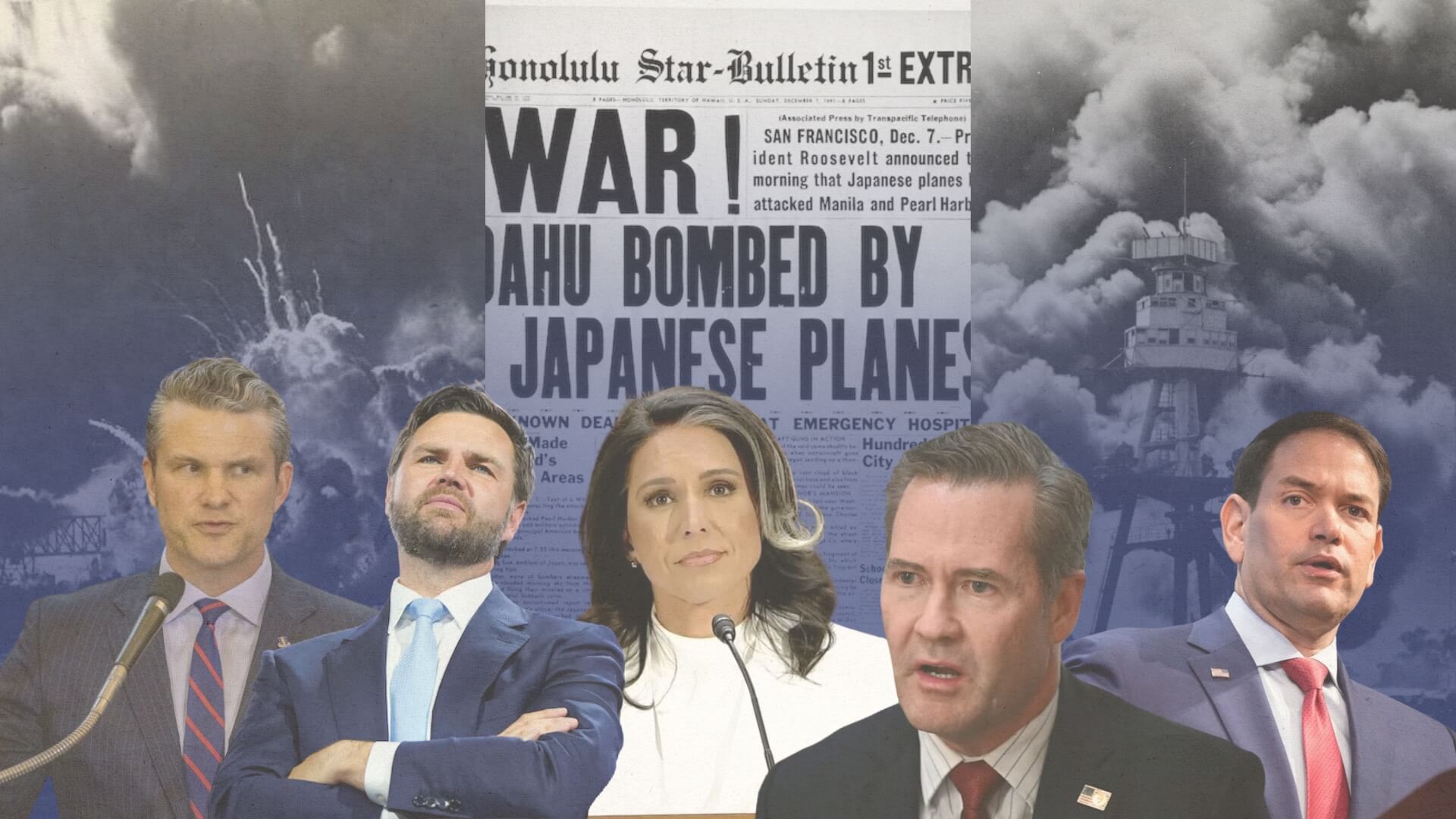
Have We learned Our Lessons from Pearl Harbor?
As described in greater detail in Diplomats & Admirals, the all-civilian War Cabinet of President Roosevelt in late 1941 consisted of Secretary of State Cordell Hull, Secretary of War Henry Stimson, Secretary of the Navy Frank Knox, and Secretary of the Interior Harold Ickes. These officials held regular weekly meetings and were in frequent communication by telephone and written memorandum. Some of the meetings were at the White House with the President, and on other occasions were held in one or another office with just the War Council members. In addition, this inner circle gathered frequently for jovial cocktail sessions in late afternoons at the White House. The President mixed the martinis, and the conversation was skewed toward politics with a heavy input of jokes and quips.
The leaders of the armed forces, General George Marshall and Admiral Harold Stark were sometimes invited to meetings of the War Council but never to the afternoon cocktail hour. When they attended War Council meetings their natural tendencies, retiring in the case of Admiral Stark and stiff and formal with General Marshall, shaped their involvement. They answered questions when asked and rarely if ever volunteered anything beyond the strict parameters of the questions.
Diplomatic Crisis in Late 1941
War with the United States was advocated by the Imperial Japanese Army following the US oil embargo as they saw their power becoming neutralized by a rearming United States. However, the Japanese civilian leadership had come to realize that a war with the United States would end in disaster for Japan. Prime Minister Konoe desperately tried to end-run the intransigent Japanese army by arranging a summit meeting with Roosevelt. This meeting was never consummated and its failure led to a fall in the Konoe government in October, 1941. The new government came to realize the impending disaster of war, but their diplomatic efforts were rebuffed by Hull and the others on the War Council.
The dominant view of the War Council was that the US Navy would quickly defeat the Japanese Navy in a war, and the US ships in the Pacific then could be reassigned to the perceived greater threat in the Atlantic. This view was exemplified by an entry in Harold Ickes diary dated November 23, 1941:
“I felt by going to war with Japan now we would soon be in a position where a large part of our Navy…could be released for service in the Atlantic.”[i]
At about the same time, Frank Knox was interviewed by Colliers magazine in an article titled “The Navy Is Ready.” He was quoted:
“(If) it came to war… the Navy would need no more than six months to knock Japan out of the water.”[ii]
A five-minute conversation with Admiral Stark could have disabused the War Council from these absurdities, but such a discussion never occurred.
A diplomatic solution to the issues with Japan was viewed by some as appeasement—a dirty word in the aftermath of the appeasement of Hitler after Munich in 1938. Harold Ickes bluntly stated:
“If this negotiation with Japan had been consummated, I would have promptly resigned from the Cabinet with a ringing statement attacking the arrangement and raising hell generally with the State Department and its policy of appeasement.”’[iii]
Diplomacy failed, and Pearl harbor was attacked within weeks of these events. Not only was the Japanese Navy not defeated in six months, but its very significant power committed the United States to a long and bloody war in the Pacific. The geopolitical implications of these events are felt to the present day.
The Signal Chat Controversy
The immediate controversy over the discussion by senior civilian national security officers using the Signal channel on March 15, 2025 has many implications. The implications of security breaches by using this channel have been expounded upon extensively. The attack plan was almost surely known to enemy defenders two hours prior to the attack, and it is shameful that this breach of security increased the danger to our Navy pilots who had to fly into the teeth of any defenses that would be mounted with this advance warning.
There is no indication of consultation with senior armed forces officers in the time before the attack. Having the discussion confined to civilian government officials raises the question of exactly how much expertise and experienced judgement do these civilian persons bring to the discussion. Exactly what in the backgrounds and experiences of Messrs Vance, Rubio, Hegseth, and Ms. Gabbard qualify them to make plans and decisions about armed tactical actions?
Senior armed forces officers have spent their careers building expertise in planning operations and employing the weapons that were used in the March 15 attack. In addition, they are familiar with security protocols and would have warned about the use of channels without the appropriate level of security. The absence of participation by these officers in the discussion created the opportunity for important gaps in crucial information and judgement—just as it did before Pearl Harbor in 1941.
[i] Nelson, Craig. Pearl Harbor, p.162
[ii] Toll, Ian. Pacific Crucible, p.45
[iii] Ickes diary, p. 655
 Diplomats & Admirals • Aubrey Publishing Co. LLC. • December 1, 2022 🛒🔗 Purchase Links: Amazon | Barnes & Noble | Kindle



0 Comments