
By Dale A. Jenkins, author of Diplomats & Admirals
After the German army rampaged through western Europe in 1940, President Roosevelt realized the other European countries could not stand up to the German war machine, and that the United States inevitably would be drawn into the fight against Hitler. Japanese expansion in the Far East also was a growing concern, but the United States was only beginning to rearm and was not ready for a two-front war. The US generals and admirals counseled Roosevelt that the most lethal threat facing the United States was Nazi Germany, and they strongly recommended that he take no action that could result in a war with Japan.
On July 24, 1941, Japanese troops occupied the southern portion of Vichy-controlled French Indo-China. In response, Roosevelt initiated a partial asset freeze of Japanese funds held in the United States that Japan needed to pay for imports of oil. He did this to prompt serious negotiations regarding the occupation, prevent further expansion and, if possible, begin a withdrawal of Japanese troops from Indo-China. Beyond the issues relating directly to the partial asset freeze, other outstanding issues between the two countries included the Japanese war against China, United States support of China through credits and lend-lease, and the Japanese membership in the Tripartite Pact with Germany and Italy.
Assistant Secretary of State Dean Acheson made the Roosevelt partial freeze order into a total freeze, and this resulted in a complete cessation of oil exports to Japan. Because Japan imported almost all its oil, and almost all of it from the United States, Acheson’s actions threatened a shutdown of the Japanese economy, including the armed forces. Acheson also coerced other oil producing countries, primarily the Dutch East Indies, to comply with the US freeze. Japanese efforts to resume trade, including the sale of gold and barter with silk, were rejected.
-

- FDR
-
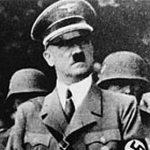
- Hitler
-
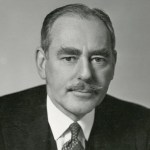
- Acheson
Through the month of August, following the asset freeze, Japanese Prime Minister Konoe attempted to schedule a summit meeting with President Roosevelt to resolve the outstanding issues between the two countries. Roosevelt agreed to meet with Konoe, and tentative meetings were scheduled for September 21 to 25 in Juneau, Alaska. Secretary of State Cordell Hull and other members of the War Council – Secretary of War (Army) Henry Stimson and Secretary of the Navy Frank Knox – were not in favor of a summit with Konoe, arguing that he would not get the support of the government and the Imperial Army for any agreement he might reach with Roosevelt. Secretary Hull did not complete the meeting arrangements, and Roosevelt did not wish to appear as accommodating Japan in the face of opposition. The meetings were never held.
Over several months in mid-1941, The Total War Institute, an elite Japanese cross-departmental research group, had made an exhaustive analysis of Japan’s economic and military strengths and weaknesses. The group presented their conclusions to the Japanese cabinet over two days, August 27-28. The group concluded that the Acheson total asset freeze would result in a slow strangulation of the economy, and war with the United States would result in the inevitable defeat of Japan. The arguments of the Total War Institute were complete and irrefutable. Diplomacy was the only course of action that would not result in a disaster for Japan.
The Imperial Japanese Army argued that the freeze was steadily making Japan weaker and rearmament was making the United States stronger. They declared that if diplomacy failed, Japan would invade the islands of the Dutch East Indies to secure a source of oil before the economy was strangled. Admiral Yamamoto had a fleet of six aircraft carriers ready to destroy the US Pacific Fleet at Pearl Harbor as a flanking move to protect the island invasions. The carriers would be underway prior to a deadline but would not attack Pearl Harbor unless the fleet commander received a message stating that diplomatic efforts had failed and the attack was to proceed.
-
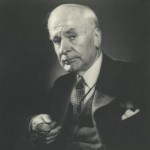
- Hull
-

- Yamamoto
-
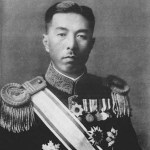
- Konoe
Discussions took place over the last months of 1941 between Japanese diplomats in Washington and Secretary Hull to resolve the crisis and prevent war. The failure to achieve a summit with President Roosevelt contributed to a loss of confidence in Konoe’s leadership, and the government fell on October 16. He was replaced a day later by War Minister Tojo, who surprisingly shifted toward accommodation with the United States. Although there were still hardline, pro-war elements in the armed forces, the new prime minister and most other ministers favored accommodation with the United States.
Japanese Foreign Minister Togo sent a continuing stream of messages to his diplomats in Washington pleading or demanding that they come to an agreement with the US diplomats and avoid a war, but laying out alternatives should diplomacy fail:
On November 2: (N)o longer is procrastination possible . . . we have decided to gamble once more on the continuance of the parleys, but this is our last effort. when it comes to our existence and our honor, when the time comes we will defend them without recking the cost.
These messages were decrypted by US intelligence and showed the shift in Japanese policy, but Hull and other members of the War Council ignored this crucial information. The total freeze continued and negotiations stalled. US ambassador Joseph Grew in Tokyo warned against delay:
Japan cannot tolerate perceived humiliation . .
Japan may go all-out in a do-or-die effort, even to
the extent of committing national hara-kiri . . . this is not
only possible but probable . . . Japan’s standards of logic or
reason cannot be gauged by any Western measuring rod . . .
It would be hazardous to base our national policy . . . [on our
assumption] that our economic pressure will not drive Japan
to war. . . War between Japan and the United States may
come with dangerous and dramatic suddenness.
Ambassador Togo continued through the month of November with nearly daily messages to his Washington diplomats advocating for an agreement. Typical was the following:
November 5: Absolutely no delays can be permitted. Please bear this in mind and do your best.
November 11: [I]t is absolutely impossible that there be
any further delays . . . cooperate in bringing about an early
agreement.
On November 20 the Japanese finally presented a proposal that included a qualified withdrawal of troops from the southern portion of Indo-China in exchange for a resumption of oil shipments. A draft agreement similar to the Japanese proposal dated November 22, 1941 was prepared by Secretary Hull. The most significant points were:
The Japanese Government undertakes forthwith to
withdraw its armed forces now stationed in southern
French Indochina, not to engage in any further military
activities there, including the construction of military
facilities, and to limit Japanese military forces in northern
French Indochina to the number there on July 26, 1941,
which number in any case would not exceed 25,000 and
which number would not be subject to replacement.
Because the Japanese had made strenuous efforts to avoid war, the Hull draft agreement surely would have been agreed with Japan, and the crisis resolved. The two countries could have carried out the terms of this agreement easily, and there would not have been a war between Japan and the United States.
The draft agreement was circulated by Secretary Hull to the British, Dutch and Chinese governments. British Prime Minister Winston Churchill was hesitant about an agreement solely between Japan and the United States because of possible exposure of their positions in the Far East, including Singapore, but he did not want to expand the war. With some stipulations, the British would support the agreement.
However, Chiang Kai-shek sent a message that adamantly opposed any accommodation with Japan:
If . . . there is any relaxation of the embargo or freezing
regulations, or if a belief of that gains ground, then the
Chinese people would consider that China has been completely
sacrificed by the United States. The morale of the entire people
will collapse and every Asiatic nation will lose faith, and indeed
suffer such a shock in their faith in democracy that a most
tragic epoch in the world will be opened. The Chinese army
will collapse, and the Japanese will be enabled to carry through
their plans, so that even if in the future America would come to
our rescue the situation would be already hopeless. Such a loss
would not be to China alone.
In addition to the message, which he also copied to Churchill in London, he mobilized his extensive lobbying network in Washington to argue against an agreement with Japan. Chiang’s lobbyists also made his demands known to the press, and this raised the perception that an agreement with Japan would constitute appeasement – a dirty word since the appeasement of Hitler in 1938. Chiang simply wanted US armed forces in the war supporting China.
Secretary Hull was staggered by the power of this diplomatic offensive and was unable to act decisively for the interests of the United States. To appease Chiang, Hull retrieved a statement of long-term goals that differed substantially from the draft that was circulated and from the previous discussions with the Japanese diplomats. The statement delivered to the Japanese provided for the withdrawal of Japanese forces from all of Indo-China and all of China, recognized only the Chiang government in China, demanded revocation of the Tri-Partite Pact, and made no specific provision for the resumption of oil exports. In addition, the tone of the statement was perceived as arrogant – a disastrous way of dealing with the Japanese.
At an Imperial Conference on December 1, the Japanese cabinet considered the statement from Secretary Hull. Because the cabinet had been so desperate for an agreement with the United States, some consideration was given to accepting the terms of the statement, even though onerous and arrogant. Former prime minister Konoe, now out of office but attending as a senior advisor, argued for a delay in the Pearl Harbor and East Indies attacks to provide time to establish a middle ground from which to negotiate a more palatable agreement.
Both these arguments were rejected. The Imperial Council decided that a diplomatic agreement with the United States had not been reached. A signal flashed out to the fleet of six aircraft carriers, already transiting the north Pacific Ocean: Proceed with the attack on Pearl Harbor.
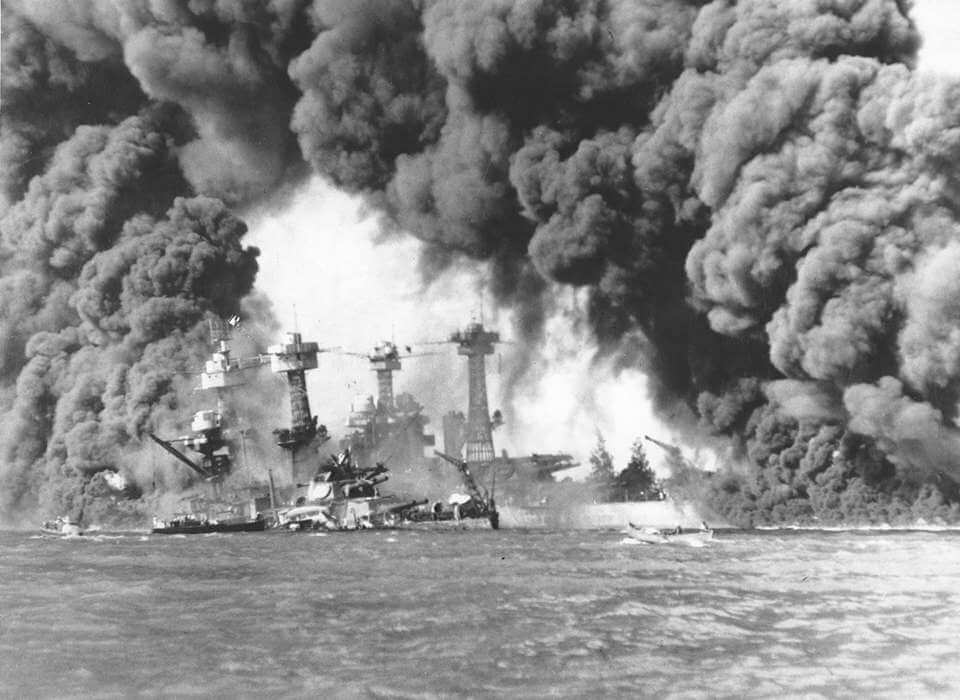
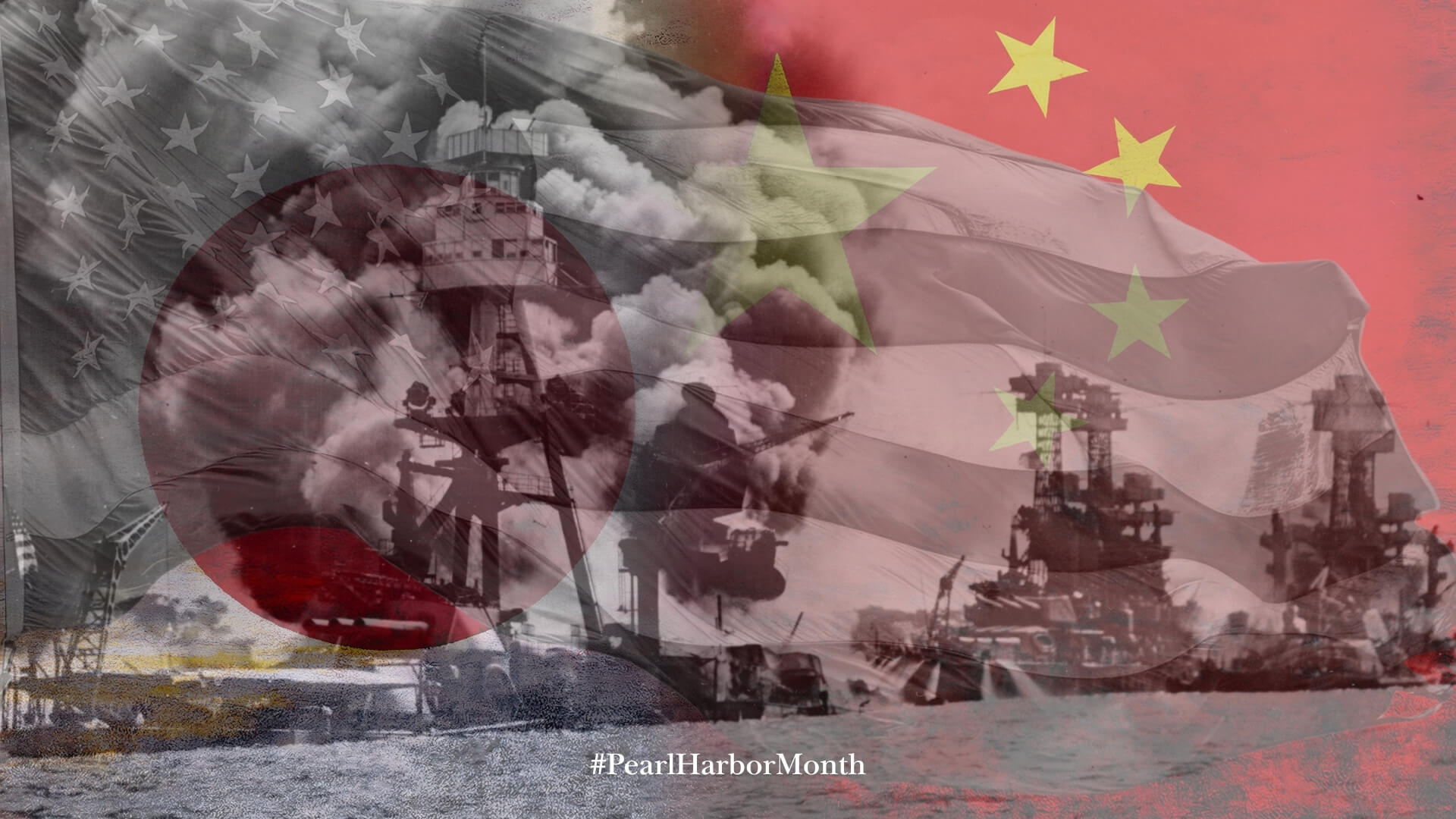
USS West Virginia Pearl Harbor Attack
I Message from Foreign Minister Togo to Ambassador Nomura, November 2, 1941 Quoted in Wohlstetter, Roberta, Pearl Harbor:Warning and Decision, Stanford University Press, 1962, p. 193
ii Grew, Joseph C., Cable to Secretary of State, Nov. 4, 1941, Ten Years in Japan, Lightning Source UK Ltd. (paperback), p. 406.
iii Wohlstetter, p. 195
iv Draft of Proposed ‘Modus Vivendi’ with Japan,” Foreign Relations of the United States Diplomatic Papers, 1941, The Far East, Volume IV, Document 467, Department of State, Office of the Historian, accessed June 8, 2022, https://history.state.gov/historicaldocuments/frus1941v04/d467.
v Foreign Relations of the United States Diplomatic Papers, 1941,The Far East, Vol. IV, Chapter VI, Document 482.
 Diplomats & Admirals • Aubrey Publishing Co. LLC. • December 1, 2022 🛒🔗 Purchase Links: Amazon | Barnes & Noble | Kindle


0 Comments